
From Page to Pixel: Adapting the Elements of Witches & Wizards Books
A conversation with our concept team about visualising Elemental Resonances that the novels describe only through feeling.
The Elements of Witches & Wizards novels do something quietly difficult: they describe magic almost entirely through consequence and sensation. A resonance is not written as a colour or a shape. It is written as a change in the air, a taste, a pressure behind the eyes. The books are generous with meaning and stingy with pictures.
That is wonderful to read and terrible to adapt, because a game must show you the thing before you can use the thing. This piece collects the arguments our concept team had for a year and a half, and where we ended up.
The first mistake: literalism
Our earliest passes tried to render the text exactly. Where a passage described "a heat that arrived before the fire", we drew heat shimmer. Where it described "the hush that comes off deep water", we drew a blue mist.
The results were legible and completely dead. We had translated similes into effects, and in doing so removed the reader's participation. The novels work because they hand you a sensation and let you build the image. A game that finishes the image for you replaces something better with something smaller.
So we stopped adapting the descriptions and started adapting the *rules underneath* them.
Reading for grammar, not for images
We went back through the books with a single question: what is consistently true about how magic behaves? Not what does it look like — what does it *obey*?
Four rules emerged, and they became our art bible.
Magic is relational. Nothing in the books has a fixed appearance. Fire in a grove looks nothing like fire on stone, because the material is a participant. This gave us our core rendering principle: elemental effects are painted onto surfaces, not floated above them. Emberwick flame chars bark, boils sap, and blackens moss differently. The element is a verb applied to a noun.
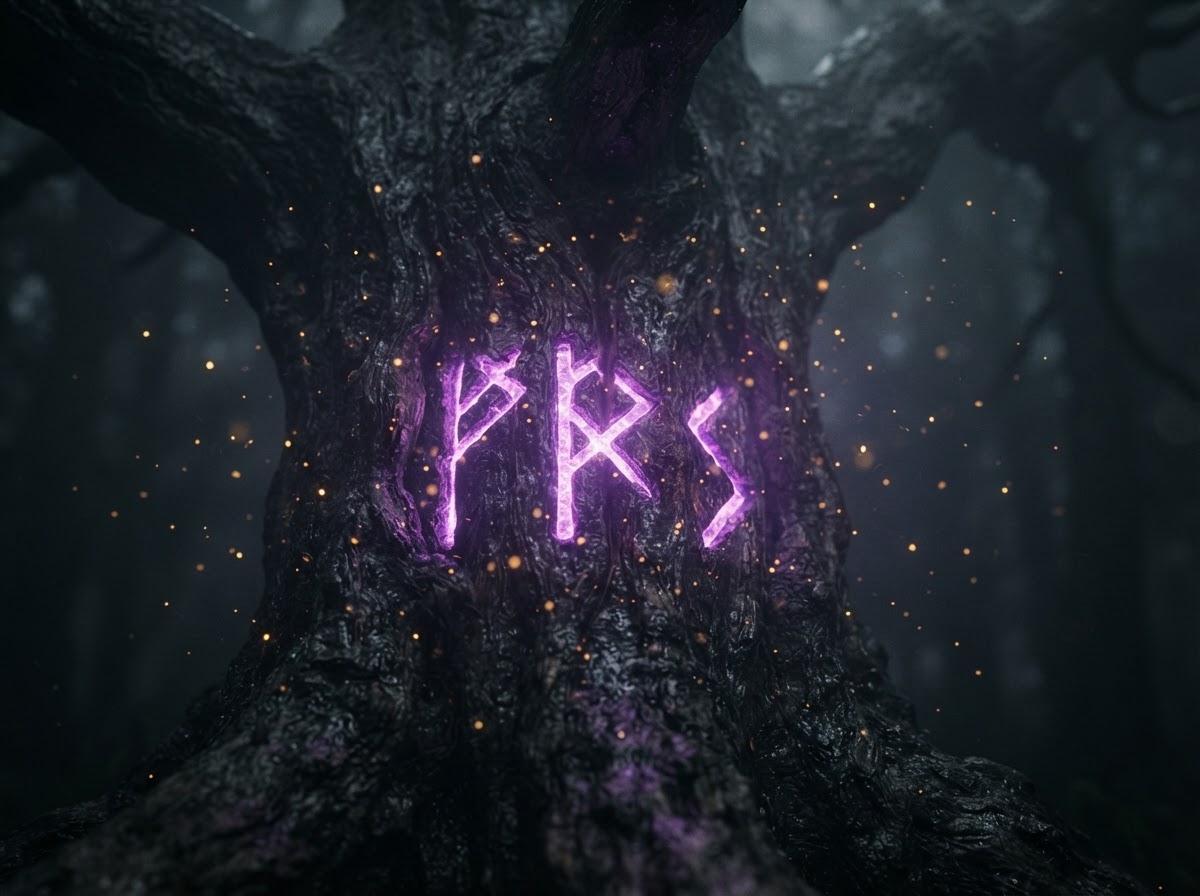
Magic is old. Every working in the novels has been done before by someone dead. Nothing looks new. So we banned clean geometry from spell visuals — no perfect circles, no crisp glyphs. Every rune in EOWW is carved by a hand that had a bad angle to work at, weathered, partially wrong, sometimes repaired in a different style than it was made.
Magic costs the practitioner. In the books, casting shows on bodies. Our character art carries elemental residue: ash under fingernails, water-swollen knuckles, the faint permanent squint of an air-caller. When a coven member specialises in the game, they visibly become that specialism over the chapters.
Magic is embarrassing. This one surprised us. The novels are frequently funny about magic. It fails, it smells, it produces the wrong result loudly in front of people who matter. We gave every tower a failure animation with dignity problems: the Tidecaller Font burps, the Zephyr Loom whines like a kettle. Nothing in EOWW is allowed to be purely majestic.
Elemental Resonances: the hardest problem
Resonance is the books' central idea and had no visual precedent. In the text, when two elements meet correctly, characters describe a *third* sensation that belongs to neither — the passage most fans quote calls it "a note struck in a room you have not entered."
Our first attempt colour-mixed the two elements. Violet plus cyan gives you a nice gradient and communicates nothing; it reads as a lighting change, not a new phenomenon.
The breakthrough came from our senior concept artist, who proposed treating resonance as a *material* rather than a light. Each of the thirty-one resonances is now a physical substance with weight and behaviour: scalding fog that pools in low tiles and drifts, thorn gale that leaves visible barbs embedded in the ground for several seconds, glass-frost that spreads along the grain of whatever it touches and shatters underfoot.
This solved the design problem and the readability problem simultaneously. A material persists, so players can see where a resonance has been, plan around it, and understand its shape without a tooltip. Light would have been prettier. Material is playable.
Colour discipline
The novels are set in a world of muted greens, wet stone, and long dusk. Fantasy games trend loud, and we had a real internal fight about whether a mobile-first defence game could survive a restrained palette.
We compromised on hierarchy rather than saturation. The world is desaturated, close to the books: bark, lichen, slate, tarnished brass. Every intense colour in the frame is *magic* or *danger*, and nothing else is permitted to compete. Violet belongs to the coven. Gold ember belongs to fire. Corruption is a bruised near-black that reads at any zoom.
The practical effect is that a glance at a busy screen tells you where power is, even on a five-inch display. The aesthetic effect is that when magic does appear, it feels like an intrusion into an ordinary world — which is exactly how the books stage it.
Working with the author
We were fortunate: the author read our design documents and pushed back on specifics, not on style. The most useful note we received was about the Hollow Beacon, our shadow structure. Our version was sinister and cool. The response, paraphrased: the shadow workings in the novels are not cool, they are *shabby*. They are what desperate people do badly.
We rebuilt it. The Hollow Beacon is now visibly improvised — mismatched stone, a scaffold nobody removed, offerings left at its base that are quietly rotting. It drains district happiness, and now it looks like something that would.
That note changed how we brief every asset. The question we ask is no longer "does this look like the book" but "would this exist in a world where the book is true".
What we would tell another team
Adapt the physics, not the paintings. A novel's prose is already the ideal version of its own images; competing with it is a losing battle. What a game can uniquely offer is the chance to *operate* a world's rules — to feel the grammar of its magic in your hands.
If we did our job, a reader who plays EOWW will not say "that is how I pictured it." They will say "that is how it works."
Continue reading

 EOWW
EOWWThe Alchemy of Defense: Balancing Magic in EOWW
How we adapted lane-defence mechanics into a 360-degree elemental city-building ecosystem — and the mathematics of mana regeneration versus tower degradation.
Read feature
 SSU
SSUOxygen as Currency: The Economic Horror of Space Station Underworld
Redefining dungeon management by making the environment the antagonist — and why we chose fragile humans over monsters.
Read feature
 SSU
SSUThe Architecture of Enclosure: Level Design in SSU
Creating a sense of scale inside confined modular corridors, and how corridor psychology drives player stress and strategy.
Read feature